There are certain places that people often think of as a stopover. Somewhere to break a long journey, stretch your legs, adjust to a new time zone.
Hong Kong is usually one of them.
But having just returned after five full days and six nights, it really does feel like somewhere that deserves more than that.
First Impressions
We arrived into Hong Kong late afternoon, returning to a city we used to call home, and it reminded us immediately just how easy it is.
The airport is incredibly efficient, and within minutes you’re on the Airport Express train heading straight into Central. It’s seamless, quick, and takes the edge off long-haul travel in a way many cities don’t.
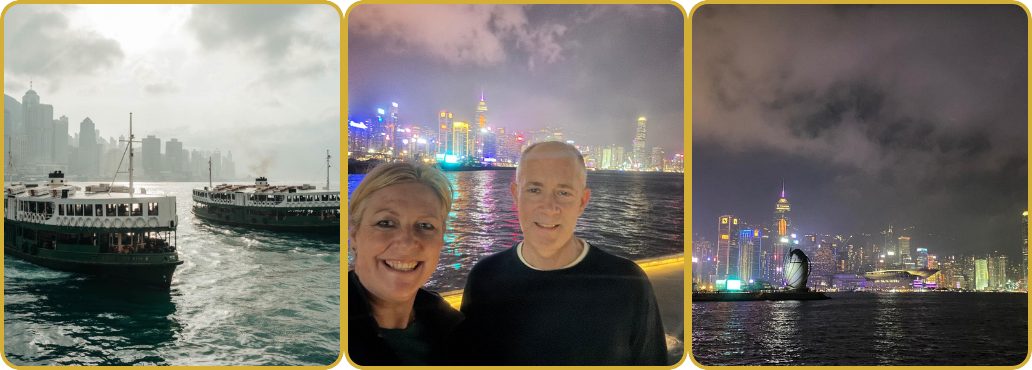
We stayed overlooking the harbour, which is always a special way to arrive into Hong Kong. The skyline is still exactly as iconic as you imagine, even if, on closer look, the city has subtly shifted. There are more buildings now, the harbour feels tighter, but the landmarks are all still there. That familiar silhouette hasn’t gone anywhere.
That first evening we kept things simple, heading out locally for dim sum. It set the tone straight away, relaxed, unfussy, and very much about the food.
The Hong Kong People Think They Know
The next day we went into Central and did what Hong Kong does best, wandering.
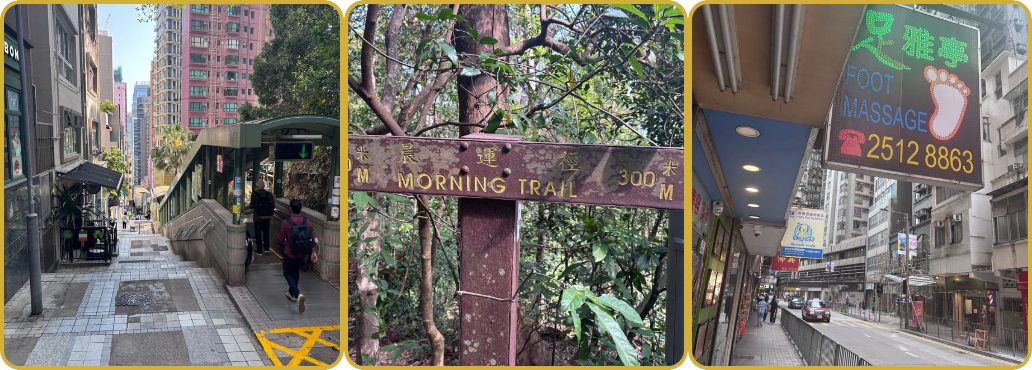
Starting at the bottom of the Central–Mid-Levels escalator and working our way up through Hollywood Road, Cat Street, and across towards Lan Kwai Fong, it’s a city that reveals itself best on foot. Small streets, market stalls, antique shops, tucked-away cafés, all layered into a surprisingly compact space.
It’s also a city that’s easy to navigate and feels incredibly safe, which makes exploring like this feel natural rather than overwhelming.
What struck us most, though, was how familiar it all felt. The energy, the sounds, and even the scent of the city. There’s something about Hong Kong that is hard to define but instantly recognisable when you’re back.
The Hong Kong Most People Don’t Expect

What many people don’t realise is that Hong Kong is not just a city.
In fact, a large portion of Hong Kong is protected country parks, and when you include outlying islands and coastline, it feels far more expansive than most expect.
One of the highlights of our trip was getting back out onto the trails.
The Peak, on Foot
Rather than taking the Peak Tram, we walked up via the Morning Trail. It’s a steady climb, but incredibly rewarding, and you quickly realise how embedded nature is within the city.
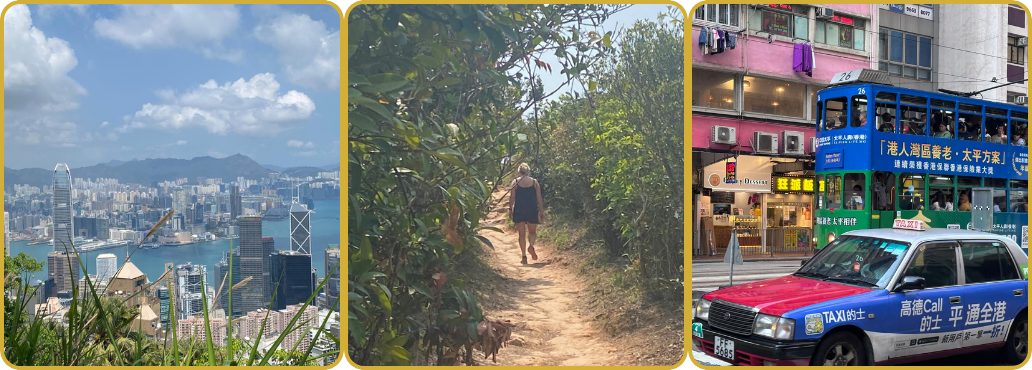
At the top, the views are exactly what you’d hope for. Sweeping, dramatic, and still one of the best vantage points in the world.
We stopped for lunch at The Peak Lookout, a historic building that hasn’t really changed over the years, which adds to its charm.
Dragon’s Back & Big Wave Bay
Another day was spent hiking the Dragon’s Back, one of Hong Kong’s most well-known trails, and for good reason.
It’s a beautiful, rolling ridge walk with views out across the South China Sea, finishing at Big Wave Bay, where you can step straight off the trail onto the beach and enjoy a refreshing dip in the sea.
It’s this contrast that makes Hong Kong so unique. One moment you’re in a dense, vertical city, the next you’re on a sandy path with nothing but sea and islands in front of you.
We also explored further trails, including parts of the Wilson Trail, known in places for its steep “thousand steps,” but with some of the most rewarding views over reservoirs and coastline. Finishing a hike and then heading straight to the beach for a swim is something Hong Kong does effortlessly well.
A City of Contrasts
Crossing over to Kowloon gives you a completely different perspective again.
The skyline lit up at night is still one of the most striking in the world, and something that never quite loses its impact. Taking the Star Ferry across the harbour is one of the simplest but most memorable ways to experience it.
The Star Ferry
It’s quick, inexpensive, and gives you front-row views of the city. It’s the sort of experience that feels almost too simple, but ends up being one of the highlights.
Kowloon itself feels busier, more local, with night markets and a little less polished in places, which is very much part of its character.
The Food (and Everything Around It)

Hong Kong has always been about food, and that hasn’t changed.
From simple, local dim sum spots to more special evenings like dinner at The Verandah at Repulse Bay, it’s a place where you can move between casual and refined without effort.
One of the nicest meals we had was at The Optimist in Causeway Bay, a relaxed Spanish restaurant with a great atmosphere.
And then there are the in-between moments. Local streets, small restaurants, places you just happen upon. These often end up being the most memorable.
We also found ourselves dipping into local reflexology spots, nothing polished or spa-like, just small, walk-in places where locals go. Strong, no-frills treatments, and surprisingly restorative. It’s those kinds of experiences that make you feel more connected to a place.
Other things to do:
One of the things that makes Hong Kong such a strong destination in its own right is how much there is just beyond the obvious.
If you’re prepared to plan a little in advance, there are some really worthwhile additions.
Lantau Island & The Big Buddha
Lantau offers a completely different side of Hong Kong again.
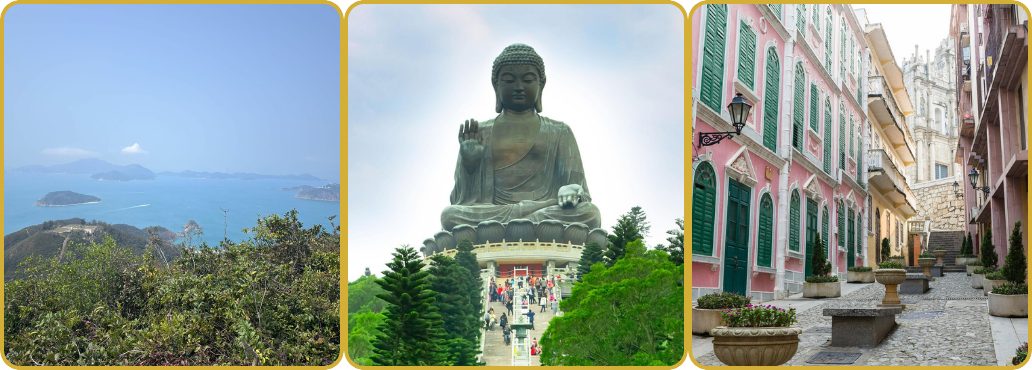
The walk up to the Big Buddha is a bit of a climb, but the setting is peaceful and feels far removed from the city. Many people take the cable car up, which gives sweeping views before you even arrive.
It’s an easy and very worthwhile day out.
Macau: A Different Pace
Macau is another easy addition, reached by ferry in under an hour.
It has a very different feel, with its Portuguese heritage still visible in the architecture, churches, and old town squares. Senado Square and the Ruins of St Paul’s are the most well-known, but it’s often the quieter corners that are the most enjoyable.
There’s a slightly nostalgic feel in places, from beachside restaurants like Fernando’s to the smaller streets lined with antiques and older shops.
Portuguese egg tarts were always the thing to seek out on trips over to Macau, still worth trying, but interestingly, you now see them just as easily in Hong Kong, which says a lot about how the two places have evolved.
If you feel like doing it a little differently, it’s also possible to take a helicopter between Hong Kong and Macau, which turns a simple transfer into something quite memorable, with incredible views over the Pearl River Delta.
It’s slower, softer, and a really nice contrast to Hong Kong.
Shenzhen: Just Across the Border
It’s also now easier than it used to be to cross into Shenzhen for a day.
Once known mainly for shopping and tailoring, Shenzhen has developed into a modern, fast-moving city in its own right. Depending on your interests, it can be an interesting addition, whether for food, design, or simply seeing another side of southern China.
A Few Useful Things to Know
Hong Kong is very much a year-round destination, but timing can shape the experience.
The most comfortable months tend to be October through April, when temperatures are milder and humidity is lower, making it ideal for walking and hiking. The summer months, from June to September, are hotter, more humid, and can bring heavy rain, but the city still runs effortlessly, and you’ll often find fewer visitors.
Getting around is incredibly easy. The MTR is efficient, inexpensive, and very straightforward to navigate, making it simple to move between neighbourhoods. Taxis are also widely available and good value, particularly for shorter journeys. It’s also worth trying the traditional “penny trams” on Hong Kong Island, a slower, slightly nostalgic way to travel through the city and a fun experience in itself.
English is widely spoken, particularly in hotels and restaurants, so it’s a very easy city to navigate, even for a first visit.
And perhaps one of the most surprising things for many people, Hong Kong offers far more space than expected. Between the hiking trails, beaches, and outlying islands, it’s easy to balance time in the city with time outdoors.
So… Stopover or Destination?
Hong Kong absolutely works as a stopover. It’s easy, efficient, and gives you a taste of something very different.
But if you have the time, even just four or five days, it becomes something else entirely.
You start to see the layers. The contrast between city and nature. The quieter experiences alongside the iconic ones.
It’s not just somewhere you pass through.
It’s somewhere that, given the time, really stays with you.